Saudi Culture & Art
The culture of Saudi Arabia is a rich one that has been shaped by its Islamic heritage,
its historical role as an ancient trade center, and its Bedouin traditions.
Saudi society has experienced tremendous development over the past several decades.
The Saudi people have taken their values and traditions – their customs,
hospitality and even their style of dress – and adapted them to the modern world.
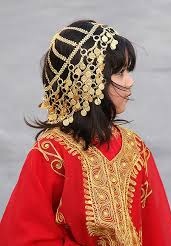 The Saudi official clothing for men consists of Shimaq or Ghutra (triangle cloth worn over the head).
On top of Ghutra, Igal (doubled black rope-like cord) is worn in order to hold Ghutra in place.
Then, a full-length, loose garment with long sleeves called Thawb is worn.
Thawb comes in different types and colors. Often, the shoes or sandals are worn.
Bisht (cloak) in its bright colors is worn over the Thawb on official occasions.
As for the women, there is no specific clothes around the Kingdom.
For the women, there are diverse traditional clothes and they conceal rather than reveal.
The Traditional Food
Some Kinds Of Saudi Food
| Name of Cuisines |
Picture of it |
| Al-Kabsah |
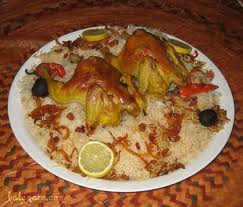 |
| Al-Qursan |
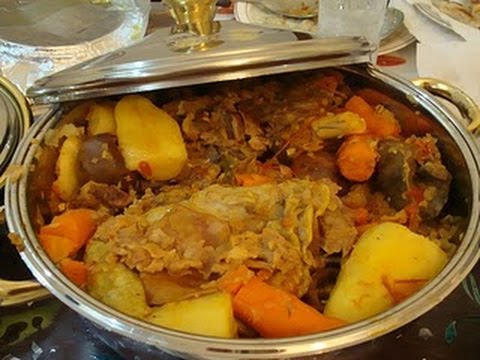 |
| they also drink special coffe |
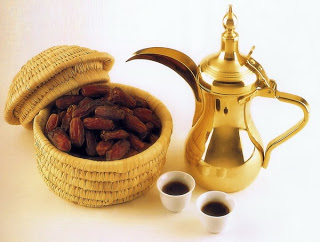 |
| kleeja |
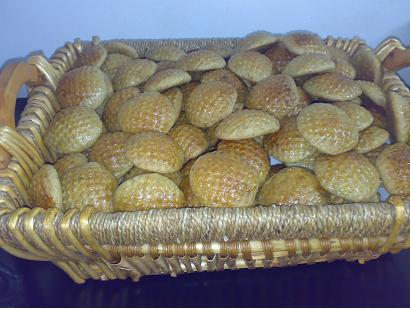 |
| jareesh |
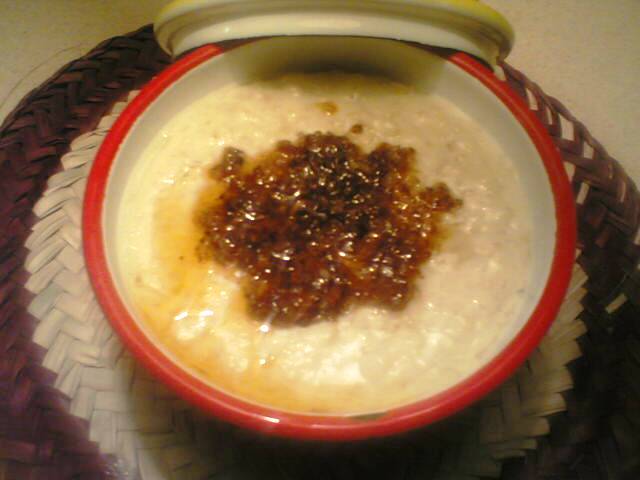 |
Some types of Saudi foods became dominant all over the provinces despite
the different social and economic segments of the Saudi community.
There are various cuisines and beverages, including Al-Kabsah, Al-Qursan,
Al-Mutazees, Al-Mutabbaq, Al-Ma’soub, Al-Mandi, Al-Arikah, Al-Aseedah,
Al-Hanith, and so on. Most of the cuisines have many nutritional benefits
and high calories that give the body the power to work.
Such cuisines are prepared by the women at home,
but the traditional restaurants have spread lately to a large extent.
You can taste any of these cuisines any time.
Their ingredients are brought from the materials available in the local environment.
Popular events and Festivales
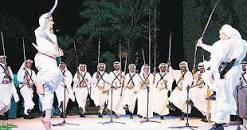 The Saudi festivales related to The customs and traditions
However, they differ from one province to another,
especially the dialect, housing pattern, clothing,
cuisines, dances, and folk songs.
The Saudi festivales related to The customs and traditions
However, they differ from one province to another,
especially the dialect, housing pattern, clothing,
cuisines, dances, and folk songs.
The most popular Festivales is :
- Al-Janadriyah Festival
- Souk Okaz
- Riyadh International Book Fair
- etc.....
The Architectural Style
The Kingdom of Saudi Arabia has plenty of buildings that reflect the distinctive
architectural heritage of the country which cannot be found anywhere else in the world.
The buildings shapes and construction methods differ from one province to the other.
And we can see here diffrent shapes and art of buldings in different directions:
- In Hejaz
- In Abha
- In Haille
- In Riyadh
- In AL.Ahsa
To see more about it click here
print
