
history
Saudi Arabia traces its roots back to the earliest civilizations of the Arabian Peninsula. Over the centuries, the peninsula has played an important role in history as an ancient trade center and as the birthplace of Islam, one of the world's major monotheistic religions.
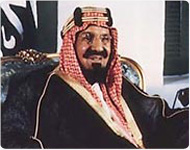
Since King Abdulaziz Al-Saud established the modern Kingdom of Saudi Arabia in 1932, its transformation has been astonishing.
In a few short decades, the Kingdom has turned itself from a desert nation to a modern, sophisticated state and a major player on the international stage.
Early History The first concrete evidence of human presence in the Arabian Peninsula dates back 15,000 to 20,000 years. Bands of hunter-gatherers roamed the land, living off wild animals and plants. As the European ice cap melted during the last Ice Age, some 15,000 years ago, the climate in THE PENINSULA became dry. Vast plains once covered with lush grasslands gave way to scrubland and deserts, and wild animals vanished. River systems also disappeared, leaving in their wake the dry river beds (wadis) that are found in the peninsula today. This climate change forced humans to move into the lush mountain valleys and oases. No longer able to survive as hunter-gatherers, they had to develop another means of survival. As a result, agriculture developed - first in Mesopotamia, then the Nile River Valley, and eventually spreading across the Middle East. The development of agriculture brought other advances. Pottery allowed farmers to store food. Animals, including goats, cattle, sheep, horses and camels, were domesticated, and people abandoned hunting altogether. These advances made intensive farming possible. In turn, settlements became more permanent, leading to the foundations of what we call civilization - language, writing, political systems, art and architecture.
Around the year 610, Muhammad, a native of the thriving commercial center of Makkah, received a message from God (in Arabic, Allah) through the Angel Gabriel.As more revelations bid him to proclaim the oneness of God universally, the Prophet Muhammad's following grew. In 622,learning of an assassination plot against him, the Prophet led his followers to the town of Yathrib, which was later named Madinat Al-Nabi (City of the Prophet) and now known simply as Madinah. This was the Hijrah, or migration, which marks the beginning of the Islamic calendar. Within the next few years, several battles took place between the followers of the Prophet Muhammad and the pagans of Makkah. By 628, when Madinah was entirely in the hands of the Muslims, the Prophet had unified the tribes so successfully that he and his followers reentered Makkah without bloodshed.

Located between the two great centers of civilization, the Nile River Valley and Mesopotamia, the Arabian Peninsula was the crossroads of the ancient world. Trade was crucial to the area's development; caravan routes became trade arteries that made life possible in the sparsely populated peninsula.
The people of the peninsula developed a complex network of trade routes to transport agricultural goods highly sought after in Mesopotamia, the Nile Valley and the Mediterranean Basin. These items included almonds from Taif, dates from the many oases, and aromatics such as frankincense and myrrh from the Tihama plain. Spices were also important trade items. They were shipped across the Arabian Sea from India and then transported by caravan. The huge caravans traveled from what is now Oman and Yemen, along the great trade routes running through Saudi Arabia's Asir Province and then through Makkah and Madinah, eventually arriving at the urban centers of the north and west. The people of the Arabian Peninsula remained largely untouched by the political turmoil in Mesopotamia, the Nile Valley and the eastern Mediterranean. Their goods and services were in great demand regardless of which power was dominant at the moment - Babylon, Egypt, Persia, Greece or Rome. In addition, the peninsula's great expanse of desert formed a natural barrier that protected it from invasion by powerful neighbors. The Birth of Islam
The kings of Saudi Arabia from 1932 to 2015

